What Retirement Does to the Brain (And What You Can Do About It
[No. 01]
Retirement is sold as the finish line. The neuroscience tells a very different story about what happens to the brain when purpose is suddenly removed - and what to do about it.
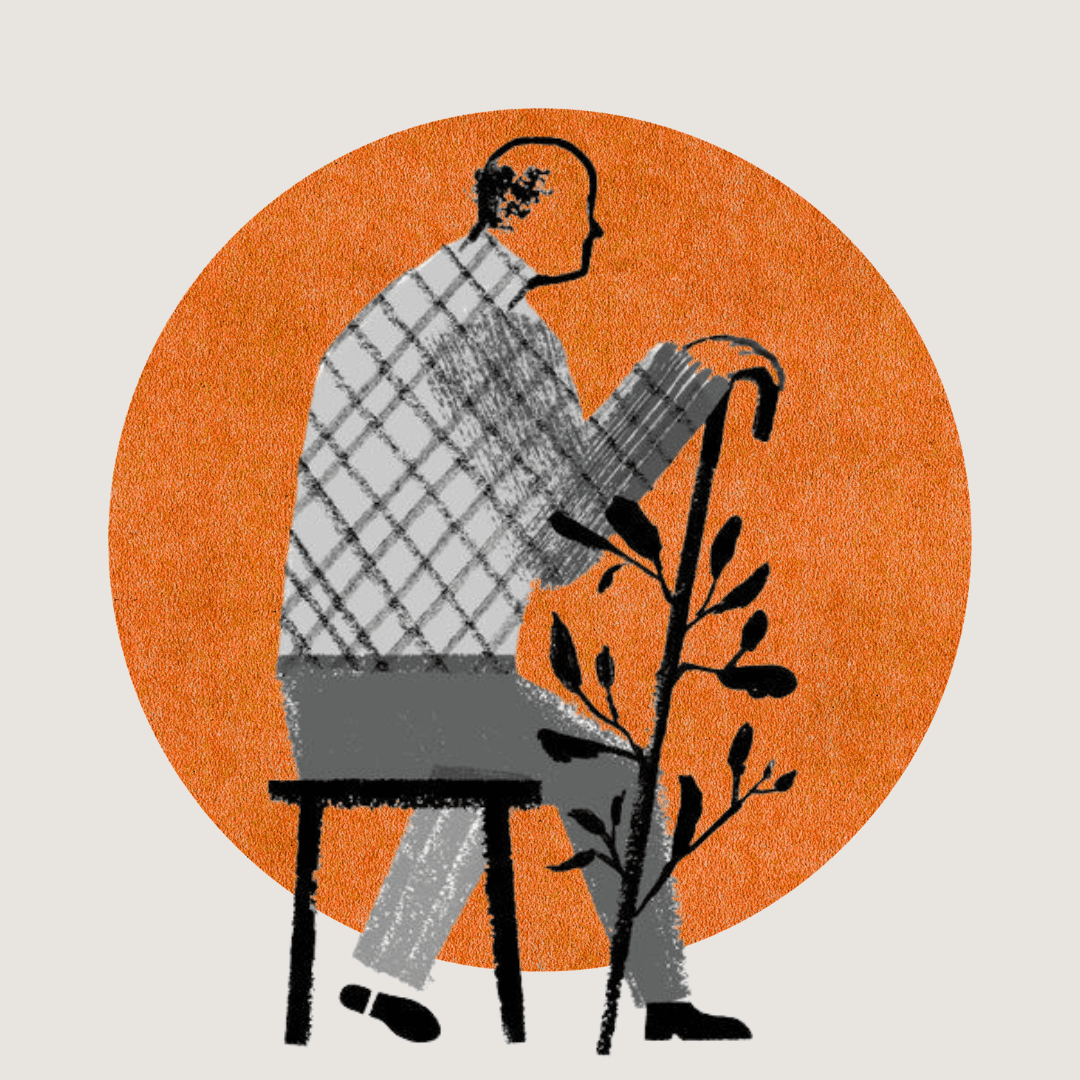
In the months after retirement, something that most people do not expect begins to happen.
It is not the adjustment to a slower schedule, though that is its own thing. It is something more fundamental. A quiet restructuring of identity that, if not addressed deliberately, can have consequences that go well beyond feeling a bit lost.
This is not speculation. The neuroscience is fairly clear on what happens to the human brain when a lifetime of structured purpose, cognitive engagement, and social role is suddenly removed.
The neuroscience of purpose withdrawal
A landmark longitudinal study published in the Journal of Epidemiology and Community Health tracked over 15,000 individuals across the transition from employment to retirement. The findings were significant: the risk of clinical depression increased by 40% in the years immediately following retirement. The risk of developing a diagnosed physical illness increased by 60%.
These are not small numbers. And the researchers were clear that the primary driver was not the loss of income or the change in routine. It was the loss of identity and purposeful engagement.
The brain is an organ that requires stimulation to maintain itself. Cognitive neuroscientists use the phrase "use it or lose it" with specific technical meaning. When the brain is engaged in complex, purposeful activity, it maintains and even grows neural connections through a process called neuroplasticity. When that engagement is removed, the same plasticity works in the other direction.
A 2020 meta-analysis in Neurology found that cognitive decline accelerated significantly in individuals who moved from high-engagement professional roles to unstructured retirement without finding alternative purposeful activity.
What is actually being lost
For the person who has spent 40 years as a doctor, engineer, teacher, or business leader, the professional role was never just a job. It was the primary structure around which identity, relationships, self-worth, and daily meaning were organised.
When that structure is removed, it is not just the work that disappears. It is the daily feedback loop that said: you are needed, your knowledge matters, your presence makes a difference.
That feedback loop is not a luxury. It is a neurological and psychological necessity.
The loneliness that many retired professionals experience is not simply the absence of colleagues. It is the absence of context in which their capabilities have meaning. You can be surrounded by family and still feel profoundly alone if nobody in the room needs what you know.
The two paths after retirement
Research on ageing and cognitive health consistently identifies two distinct trajectories after professional life ends.
The first is withdrawal. A slow reduction in engagement, stimulation, and social connection that accelerates cognitive and physical decline. It does not always look dramatic from the outside. It often presents as contentment, as finally resting. But underneath, the brain is losing ground.
The second is reinvention. Not a return to the exact structure of professional life, but a deliberate replacement of it with new forms of purpose, engagement, and community. Mentoring. Teaching. Spiritual practice. Creative work. Community leadership.
The data on this trajectory is striking. A Harvard study tracking over 1,000 adults across their 60s, 70s, and 80s found that the single strongest predictor of healthy ageing, both cognitively and physically, was the quality of purposeful engagement and social connection, not genetics, not diet, not exercise.
What this means practically
The brain that spent four decades solving complex problems, leading people, and navigating high-stakes environments does not stop being that brain on the day of the retirement party. It simply loses its daily training ground.
The task after retirement is not to rest. It is to find a new arena. One that respects the depth of what you have built and gives it somewhere meaningful to go.
That is not a small ask. But the alternative, leaving a lifetime of expertise sitting quietly in a living room, is a loss that extends far beyond the individual.
The world does not have enough of what you know. The question is simply where it goes next.